

Master Your State: The Leadership Skill No One Teaches (But Should)
Your emotional and physiological state (how you feel in your body right now) is the single most powerful predictor of how your next conversation will go. State management is the neuroscience-backed skill that helps leaders shift from anxiety to confidence in 60 seconds or less. When you master your state, you stop reacting to workplace stress and start responding strategically. This transforms how managers in the Puget Sound region and Bellingham, Everett, Lynden and Ferndale handle conflict, give feedback, and show up as calm, capable leaders, even when their internal experience says otherwise.
The Hidden Pattern Behind Every Failed Conversation
It's 9:47 AM in your Seattle office. In 13 minutes, you have a meeting with an underperforming employee.
Your stomach is tight. Your shoulders are creeping toward your ears. Your breath is shallow. You're mentally rehearsing what you'll say, but the words keep tangling.
You walk into that meeting carrying all of that tension, transmitting it through your tight face and restricted body language and movements. Before you've said a single word, your employee's nervous system has picked up on those non-verbal cues and registers "threat." Their body tenses. Their defenses go up. The conversation you carefully planned spirals into defensiveness or shut-down silence.
Here's what happened: You brought the wrong state to the conversation.
Research from the HeartMath Institute shows that our emotional state creates an electromagnetic field that extends 3-6 feet from our bodies HeartMath Institute. When you're anxious, everyone around you feels it, before you've opened your mouth.
This is why some managers in Bellingham and Bellevue can deliver difficult feedback that lands well, while others trigger defensiveness with identical words. The difference isn't the script, it's the state.
What Exactly Is "State"?
In neuro, cognitive, and behavioral science, state refers to the combination of your:
Thoughts (internal dialogue, mental images)
Emotions (what you're feeling)
Physiology (body posture, breathing, muscle tension, facial expression)
These three elements form a feedback loop. Change one, and the others shift automatically.
Think of state as your internal operating system. When you're in a resourceful state (calm, confident, curious) you access your best thinking, clearest communication, and most strategic responses. When you're in an unresourceful state (anxious, angry, overwhelmed) your prefrontal cortex goes offline, and your amygdala takes over.
Dr. Joe Dispenza's research demonstrates that your body doesn't distinguish between an experience happening in the world and one vividly imagined in your mind [Dispenza, Breaking the Habit of Being Yourself]. When you mentally rehearse failure, your body produces the same stress hormones as if you're actually failing.
This is why managers who catastrophize before difficult conversations ("This is going to be a disaster") physiologically prepare their bodies for disaster, and often create exactly what they feared.
The Five States That Sabotage Leadership Communication

State 1: Anxious/Fearful
Physical markers:
Shallow breathing, tight chest, tension in shoulders and jaw, stomach discomfort
Mental patterns:
"I'm going to screw this up" / "What if they get angry?" / "I don't know what to say"
Communication impact:
Voice sounds tight or shaky, words come out rushed, difficulty maintaining eye contact
What employees perceive:
Uncertainty, lack of confidence, something to worry about
State 2: Angry/Frustrated
Physical markers:
Clenched fists, rigid posture, heat in face, rapid breathing
Mental patterns:
"They should know better" / "Why do I have to deal with this?" / "This is unacceptable"
Communication impact:
Harsh tone, judgmental language, interrupting, body language that intimidates
What employees perceive:
Threat, unfairness, personal attack
State 3: Overwhelmed/Defeated
Physical markers:
Slumped posture, heavy sighs, fatigue, difficulty focusing eyes
Mental patterns:
"This is too much" / "Nothing I do works" / "I can't handle this"
Communication impact:
Vague language, trailing off, lack of clarity or conviction
What employees perceive:
Weakness, lack of direction, instability
State 4: Defensive/Protective
Physical markers:
Crossed arms, leaning back, tight facial expression, minimal eye contact
Mental patterns:
"I need to protect myself" / "This could come back to bite me" / "What if I'm blamed?"
Communication impact:
Overly cautious language, documenting everything, inability to be genuine
What employees perceive:
Distrust, bureaucracy, lack of human connection
State 5: Avoidant/Numb
Physical markers:
Flat affect, minimal body language, monotone voice, physical distance
Mental patterns:
"I'll deal with this later" / "It's not that bad" / "Maybe it will resolve itself"
Communication impact:
Indirect communication, hints instead of clarity, delayed responses
What employees perceive:
Indifference, lack of care, absence of leadership
If you're a manager in Everett or Whatcom Coutny recognizing yourself in these patterns, you're not broken, you simply haven't learned state management.
The Neuroscience: Why State Determines Outcome
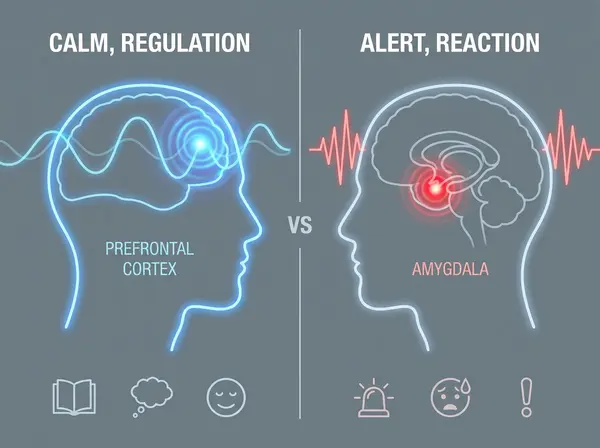
Your brain has two primary operating modes:
1. Prefrontal Cortex (Strategic Brain)
Executive function, problem-solving, empathy
Activated when you feel safe and calm
Enables nuanced thinking and effective communication
2. Amygdala (Survival Brain)
Fight, flight, freeze responses
Activated when you perceive threat (including social threat)
It suppresses higher-level thinking (which can feel like it’s shut down)
According to research from UCLA's Social Cognitive Neuroscience Laboratory, social threats (like difficult conversations) activate the same brain regions as physical threats [Lieberman, Social Cognitive Neuroscience]. Your brain doesn't distinguish between a performance review and a predator.
When you enter a conversation in an anxious or defensive state, your amygdala is already activated. This triggers a cascade:
Your body language signals threat
The other person's amygdala activates (mirror neurons)
Both of you are now in survival mode
Strategic communication becomes neurologically impossible
But here's the powerful truth: You can change your state on demand.
The 60-Second State Management Protocol
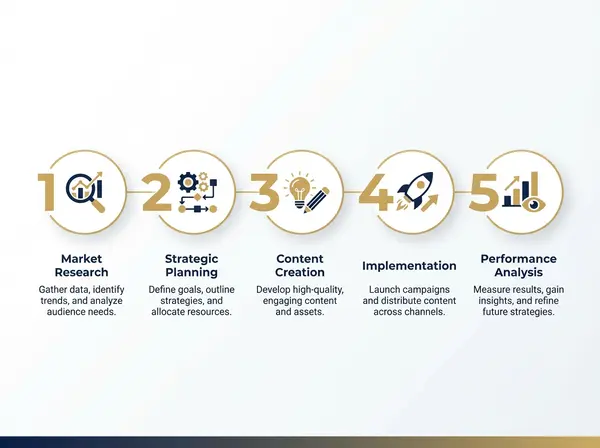
Before any important conversation, use this five-step protocol developed from communication science and neuroscience research:
Step 1: Interrupt the Pattern (10 seconds)
Physically move: Stand up, shake out your hands, roll your shoulders.
Break the anxious thought loop through deliberate action.
Your body cannot maintain an anxious state while executing large motor movements. The movement burns off adrenaline and shifts your body’s state.
Step 2: Regulate Your Breathing (15 seconds)
Inhale for 4 counts through your nose
Hold for 4 counts
Exhale for 6 counts through your mouth
This activates your parasympathetic nervous system (calm response).
Research shows box breathing reduces cortisol within minutes Stanford Medicine.
Step 3: Adjust Your Physiology (10 seconds)
Stand or sit with an open, upright posture
Roll shoulders back and down
Soften your facial muscles (particularly jaw and forehead)
Amy Cuddy's research demonstrates that power poses increase confidence hormones [Cuddy, Presence].
Step 4: Choose Your Mental State (15 seconds)
Ask yourself:
"What state would serve this conversation best?"
Common resourceful states:
Curious
Calm
Confident
Compassionate
Clear
Recall a specific time you felt that way and replay the memory vividly.
Step 5: Set Your Intention (10 seconds)
Complete this sentence:
"My intention for this conversation is to ___________"
Be specific. Not broad.
For example:
“I want to inspire John to learn ___ new skill.”
Not: “I want John to grow.”
Your intention becomes your anchor when the conversation gets difficult.
Total time: 60 seconds. Impact: transformational.
Managers throughout Bellevue and Kirkland report that this simple protocol completely changes their confidence and effectiveness.
Top 8 State Management Techniques for Leaders

Beyond the 60-second protocol, these techniques help you maintain resourceful states throughout your workday.
1. Morning State Setting
Start each day by consciously choosing your state rather than defaulting to anxiety. Before checking email, spend 3 minutes visualizing yourself handling challenges with calm confidence.
2. Anchoring Resourceful States
Anchoring creates a neurological connection between a physical gesture and a desired state. When you're feeling confident, press your thumb and forefinger together. Repeat this pairing 15-20 times. Eventually, the gesture alone triggers confidence.
3. Pattern Interrupts
When you notice yourself spiraling into unresourceful states, use physical interrupts: stand up, walk outside, do 10 jumping jacks, splash cold water on your face. You cannot maintain an anxious thought while engaged in novel physical activity.
4. Reframing Before Events
Instead of mentally rehearsing worst-case scenarios, vividly imagine the conversation going well. Your nervous system responds to what you imagine as if it's real.
5. State Stacking
Remember 3-5 times in your life when you felt genuinely confident. Replay each memory in sequence, intensifying the feeling with each one. This compounds resourceful emotions.
6. Environmental State Cues
Keep objects in your office that trigger resourceful states: photos from achievements, quotes that inspire, colors that calm. Your environment shapes your state.
7. Movement Breaks
Every 90 minutes, take a 5-minute movement break. Walk stairs, stretch, move to music. Sitting in the same position creates physical and mental stagnation.
8. State Recovery After Difficult Interactions
Don't carry one difficult conversation into the next meeting. Take 3 minutes to physically shake off the previous interaction, breathe, and reset before moving forward.
Recognizing State Contagion in Your Team

As a leader, your state doesn't just affect you, it spreads throughout your team.
State Contagion Patterns to Notice
When you're stressed, meetings become tense (even when discussing neutral topics)
When you're excited, your team engages more readily with new ideas
When you're defeated, your team loses motivation
When you're confident, your team takes more productive risks
Mirror neurons mean your emotional state is the most powerful communication you transmit [University of Parma, Mirror Neuron Research].
This is why two identical messages can have opposite effects depending on the leader's state.
Leaders in Bellingham and Everett who master their own state report dramatic shifts in team dynamics, not because they changed what they said, but because they changed how they showed up.
State Management vs. Emotional Suppression
A critical distinction: State management is NOT about suppressing or denying your emotions.
Emotional Suppression (Harmful)
Pretending you don't feel anxious while your body remains tense
"Powering through" stress without addressing it
Creating a false persona that requires exhausting maintenance
State Management (Healthy)
Acknowledging your current emotional experience
Consciously choosing a more resourceful state
Aligning your thoughts, emotions, and physiology toward your goals
You can acknowledge "I'm feeling nervous about this conversation" while simultaneously choosing to shift into calm confidence. Both realities coexist.
Research from Dr. Jill Bolte Taylor shows that the physiological lifespan of an emotion is just 90 seconds unless we feed it with continued thoughts [Taylor, My Stroke of Insight].
State management helps you acknowledge emotions without being controlled by them.
Common Obstacles to State Management (And Solutions)
Obstacle 1: "I don't have time for this before every conversation"
Solution:
The 60-second protocol takes less time than the hours you'll spend managing the fallout from a conversation that went wrong. Choose where to invest your 60 seconds.
Obstacle 2: "My anxiety is too strong. I can't just breathe it away"
Solution:
You're right that breathing alone won't eliminate anxiety. But it will shift you from a 9/10 intensity to a 6/10, which is often enough to access strategic thinking. Progress, not perfection.
Obstacle 3: "This feels fake or manipulative"
Solution:
Choosing a resourceful state isn't manipulation, it's self-leadership. You're accessing the confident part of yourself that already exists but gets overshadowed by anxiety.
Obstacle 4: "What if I can't control my state in the moment?"
Solution:
State management is a skill that improves with practice. Start with low-stakes conversations. Build the neural pathways. Over time, state shifting becomes automatic.
Also, have a few exit phrases ready if you feel overwhelming emotions coming on suddenly. Breathe, then say:
“That’s an interesting observation. Let me think about it and get back to you.”
The Transformation Timeline
When managers commit to daily state management practice, here's the typical progression:
Week 1: Awareness
You start noticing your default states and their patterns. This awareness alone reduces their grip.
Week 2 to 3: Intentional Shifts
You can shift your state with deliberate effort before planned conversations. It feels awkward but works.
Week 4 to 6: Pattern Change
State management becomes more automatic. You catch yourself mid-spiral and redirect quickly.
Week 7 to 12: New Default
Resourceful states become your new baseline. You spend more time in calm confidence than anxiety. Others notice the change.
Month 4+: Leadership Presence
State management is unconscious competence. You naturally regulate yourself and positively influence others' states. This is what people call executive presence.
Your State Management Action Plan
This Week
Notice your default state when facing difficult conversations
Practice the 60-second protocol once per day (even before easy conversations)
Journal what you observe
This Month
Use state management before every important conversation
Create an anchor for your most resourceful state
Implement one additional technique from the list of 8
This Quarter
Make state management your morning ritual
Teach state awareness to your team
Notice how team dynamics shift as you consistently show up in resourceful states
About the Author
Barbara Jenks is a Strategic Leadership Communication Coach specializing in neuro, cognitive, and behavioral science, neuroscience, and improv techniques. With over 20 years of HR experience, she helps managers in the Greater Puget Sound region master the internal skills that drive external results. Connect with Barbara at Clearly Communicate.
FAQ SECTION
Q1: What is state management in leadership?
State management is the practice of consciously regulating your thoughts, emotions, and physiology to access resourceful mental and emotional states before important interactions. It's a science-informed technique that helps leaders show up calm and confident rather than anxious or defensive.
Q2: How long does it take to change your emotional state?
With proper technique, you can shift from an anxious state to a calm, confident state in as little as 60 seconds using breath work, posture adjustments, and intention-setting. The physiological lifespan of an emotion is approximately 90 seconds when not reinforced by continued thoughts.
Q3: Can state management help with workplace anxiety in Seattle?
Yes, managers in Seattle and throughout the Puget Sound region use state management techniques to reduce workplace anxiety, improve difficult conversations, and build executive presence. The practice is backed by neuroscience research on emotional regulation and stress response.
Q4: What is the difference between state management and emotional suppression?
State management acknowledges your current emotions while consciously choosing more resourceful states. Emotional suppression denies feelings and creates tension. State management is healthy self-leadership; suppression is harmful avoidance.
Q5: How does your emotional state affect employee conversations?
Your emotional state creates an electromagnetic field and triggers mirror neurons in others, causing "state contagion." When you're anxious, employees unconsciously register “threat” and become defensive. When you're calm, it is more likely that they will relax and engage productively.
Q6: What are resourceful states for leaders?
Resourceful states for leaders include calm, confident, curious, compassionate, clear, and creative. These states activate the prefrontal cortex, enabling strategic thinking, empathy, and effective communication. Unresourceful states like anxiety activate the amygdala and shut down higher-level thinking.
Q7: How can I practice state management in the greater Puget Sound region?
Practice state management through workshops with strategic communication coaches, daily mindfulness routines, breath work, physical movement, and science-informed techniques like anchoring. Many Bellevue and Bellingham managers work with coaches to develop personalized state management protocols.
Q8: What is anchoring for emotional states?
Anchoring creates a neurological association between a physical gesture (like pressing thumb and forefinger together) in a desired emotional state. By repeatedly pairing the gesture with the feeling when you naturally experience it, you can trigger that state on demand later when you engage in the anchor (press your thumb and forefinger together).
